Ticketmaster was taken to task this past week for a supposed inadvertent re-direct to its subsidiary company TicketsNow, a secondary market ticket selling site, during the sale of tickets for upcoming Bruce Springsteen concerts in May at East Rutherford, N.J.
Springsteen fans were outraged, the Boss was outraged, Ticketmaster paid not a fine but a few hundred thousand dollars for what was termed investigative costs and a digital wall is to be enforced for one year between the two sites.
Basically, a slap on the wrist.
Let’s back up. What are we talking about here? First of all, let’s call it what it is. Secondary market ticket selling site? TicketsNow is a scalping site. Forget the ethics problem of such a site for a moment. Maybe I’m dim, but what are the legalities of such a site? Evidently, these services are technically not illegal in most states. But then why is it illegal to try and scalp a ticket – try to get payment above the face value of the ticket – outside a concert venue but it’s OK to sell tickets at inflated prices on the internet, taking orders before the actual tickets go on sale to the public. Doesn’t that boggle the mind?
Attention, Dick Blumenthal and all other state attorneys general: This should be illegal. How do these sites skirt or find loopholes in existing laws? Because those laws are obviously weak or in some cases non-existent.
Add to this Ticketmaster’s purchase of TicketsNow last year for $265 million. Now forget about the legality issue, isn’t this a huge conflict of interest? Ticketmaster not only wants to charge its exorbitant rates one time, it wants a piece of this questionable scalping market as well.
This is one of the many reasons I hate going to concerts at these huge, mega arenas. For the average music lover, it’s nearly impossible, without some inner connection, to land great seats even if you are willing to pay top price. But then to only have the alternative of paying as much as five times face value of the tickets to score good seats is ludicrous.
Of course now Ticketmaster wants to merge with Live Nation, further reducing options for concert goers. When will it end?
eBay, which owns StubHub!, the largest secondary market scalper, defended the existence of its services last year when it was under fire describing the secondary market as “a legitimate one which benefits consumers.”
Really? Now how does that benefit a music fan when he has to pay double or more for tickets that sold out in minutes partly because of demand but also because of these services gobbling up as many tickets as possible?
There is a class action lawsuit that was filed against Ticketmaster in Canada earlier this month. Let’s hope it’s part of a wave of the future.
This NY Times article, which focuses on sporting events, doesn’t defend scalping but also doesn’t see it at as the source of high ticket prices. It makes a case for the old supply-and-demand argument. Really? It basically says tickets are underpriced to begin with. Really? Tickets are underpriced? I’m sorry but those of us living in the real world and not on top of it don’t agree with that.
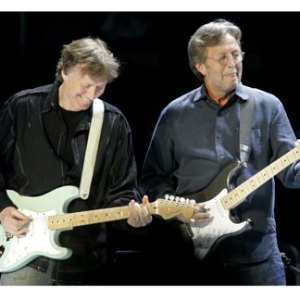 They had performed together in early 2007 at an English festival, Clapton joining Winwood’s touring band, and later that summer at Clapton’s Crossroads Festival in Chicago. Their set, which closed the event, had Winwood this time playing with Clapton’s band. It’s all documented on the DVD of the festival, and it’s a spectacular performance by both.
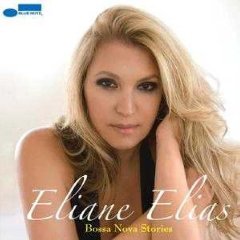 I had only become acquainted with her music in the mid-1990s, but Elias, from Brazil, had been around on the jazz scene in this country since at least the mid- ’80s, playing at times with her then-husband Randy Brecker of the Brecker Brothers. I loved her mix of bossa nova and bebop with a classical base that she infused in standards, U.S. and Brazilian, and her compositions. Her playing has always combined astounding technique with a unique feel that so wonderfully blends American jazz leanings with strong latin influences.
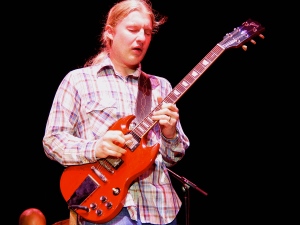 The setting was perfect for it. The Palace is a proscenium theater, with its newly reupholstered red velvet seats, in all its original ornate glory, particularly the design and decor of the ceiling,walls and balcony of the hall. The light show, projected from the back of the stage, provided stunning yet subtle atmospherics, and the band played a bluesy roots style of music with world and jazz shadings that put the emphasis on inprovisational playing, everything that turned the music and show business in general on its ear from about 1966 to 1969. Probably most important the audience sat and listened to the music for about 90 percent of the show, with the exception of several standing ovations and the encore, unlike the mindless standing throughout an entire concert you find at venues such as The Meadows and even the Oakdale Theater.
 Guitarist Julian Coryell is the son of jazz-rock pioneer and legend Larry Coryell, Karma Auger’s dad is Brian Auger, who played with Julie Driscoll and led the Trinity and Oblivion Express in the ’60s and ’70s, and Nicklas Sample is the son of Joe Sample, the keyboard player from L.A. based fusion band The Crusaders.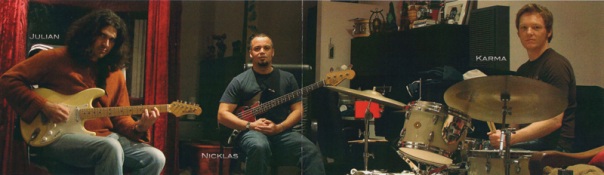
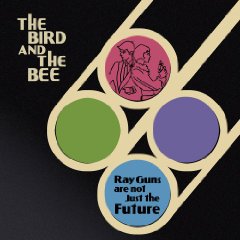 So, I was watching Leno the other night and who appears at the end of the show? The Bird and the Bee, which is Inara George’s group with Greg Kurstin, who writes all the music with her and plays most of the instruments on their two CDs. Their performance was not only quite good, it was almost surreal. You can see for yourself in the clip below of the band performing the same tune, My Love, at the Independent in San Francisco.
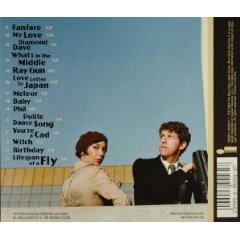 The Bird and the Bee bring a refreshing approach to what at first strikes you as a pure pop sound. But there’s more going on. Its foundation features sophisticated instrumentation and technique, impeccably arranged underneath George’s ethereal vocals, which float airily between hushed Brazilian cool and jazz-tinged soulfulness. The writing accents beautiful melodies backed with sun-drenched harmonies and smart, somewhat elusive lyrics.
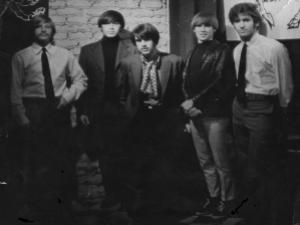 Pulse was a group formed from the ashes of two bands managed by Doc Cavalier, who owned Syncron Studios in Wallingford, later Trod Nossel. One was the Bram Rigg Set (left), who had formed in 1966 and had a single on Kayden, I Can Only Give You Everything, the other the Shags, who had enjoyed great popularity in New Haven and the state for several years with singles such as Wait And See and Hey Little Girl. Both broke up in the summer of 1967.
 I was a little underwhelmed at first, although it’s slowly getting better as I adjust. Using a Zinio Reader, which you need to download, or a browser version of the program, PC Mag digital seems like the real thing but doesn’t feel like it. It looks how it probably does to the designers creating it on a computer. It’s easy to use, fast, searchable and sharp looking. Is it easy to read? No. You have to get used to it.