Peter Neri is a storyteller. He tells his tales with his acoustic guitar.
He’s an impressionist. His music evokes emotions and thoughts that are indicated by the mood of each of his solo guitar pieces. The mood is tied to the titles of each of the nine tracks on Neri’s latest album release Rough Edges, his first since 2002.
 On Rough Edges, Neri takes the listener on short journeys through places that conjure every thing from a drippy faucet to the expanse of a cruise down the Amazon to a hot rod running on moonshine that is probably running moonshine in the dark hills and valleys of West Virginia. It’s achieved by virtuoso performances that put all of Neri’s talents on display from single string, partial chording and finger-style to Neri’s own self-described slam-punk finger-style.
He continually shows his adeptness at establishing a main theme and then interjecting adjacent passages that enhance the piece and carry the listener to the further reaches of his imagination.
Neri says he is more interested in “capturing the energy needed to express the nature of the song rather than trying for technically pristine takes.” Don’t worry there is abundant technique on display and the emotionally charged performances never sacrifice virtuoso ability for spontaneity. It’s all here.
The title track isn’t exactly chicken pickin’ but more like chicken pluckin’, as Neri describes it. The pluckin’ moves the tune along at a nice pace as you picture yourself strutting in the barnyard. He then segues to a delicate reverie that suspends time before coming back to the theme. Neri slips in an alternative playing of the main theme and another quiet diversion before bringing the tune to an end. All in 2:07.
The Sad, Sad Demise of the Underwood 5 refers to the long-gone and lamented typewriter. Neri uses the sound effect of the mechanical typewriter in the intro (and outro) of the track and then sets a hurried yet even tempo as he plays through the short, packed sections of this concise composition.
Perhaps the most elegant and lovely melody, adorned with jungle sound effects, is Journey up the Amazon, during which you can easily envision lightly gliding down the expansive river, taking in its myriad delights and majestic dark shadings. The aforementioned track with the leaky faucet, Faucet Still Dripping, moves at the pace of a plip-plop, drip-drop of that stubborn fixture and Celtic Vision lets you imagine dancers running through their steps to a lilting Irish-flavored melody.
The Question?, with its Latin leanings, and The Answer!, finger-picking balladry, seem perfectly fitted for two parts of a whole but each stands on its own as an individual statement, and Sneaky Pete illustrates Neri’s penchant for interjecting various quiet passages to his main themes.
The CD ends with Moonshine in the Gas Tank, a high powered slide guitar workout that envelops the listener in blues-oriented phrases and an adeptly executed country blues-rock feel.
In all, Neri returns with another volume of impressionist musical stories, along with previous releases Night Visions and Dreaming of Home, that carry you along on another glorious trip through the workings of a singular talent.
It’s available on CD at CDBaby or www.peterneriguitar.com/contact. Streaming versions of the album are on CDBaby, Spotify, Apple iTunes, Amazon, Deezer and many others streaming services.
Peter hosts a radio program, One Guitar, on WFVR 96.5 FM from Royalton, Vermont, where you can stream it (https://www.royaltonradio.org/) Tuesdays at 2 p.m. He spins some of the world’s best solo acoustic guitar music. The show will also begin airing on Blues and Roots radio (https://www.bluesandrootsradio.com/homepage) on Tuesday, July 30 at 8 p.m.
 1. Already Free,
  5.
5.  I don’t recall anyone buying the mono version. Perhaps if you couldn’t afford the $1 extra for stereo, because that’s all it was. But that’s not the point. The way to listen to Sgt. Pepper’s back then, as it is now, was in stereo.
 The second time was in the spring of 1969 at the improbable club in New Haven, the Stone Balloon, fashioned after Greenwich’s Village’s
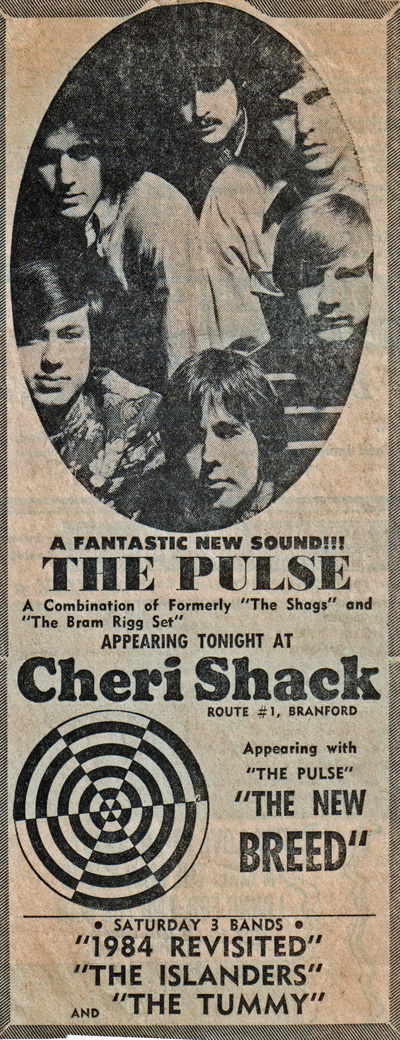
 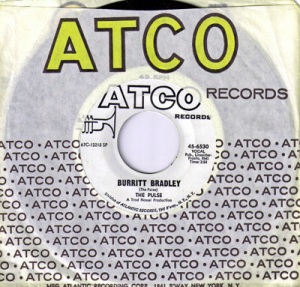 In January, 1968, Pulse started rehearsing in earnest to play some live dates and start recording its first album. The first gig was to be at a small club in Watertown, the Shack. We used to rehearse in what was called the Shed in back of Syncron Studios. The rehearsal room was an unfinished concrete-floored area no larger than a two-car garage with 2×4 framing exposed on the first floor of what looked like an old barn. This was perhaps the most dangerous place I’ve ever rehearsed, yet we carried on in the Shed for 2-plus years as Pulse.
 Soon after forming, we added a sixth member, Jeff Potter, who played a mean blues harp and also added percussion with a conga drum and eventually occasional keyboards. Ray Zeiner, the keyboard player from the Wildweeds, had recommended him. Jeff and Ray lived next door to each other right down on the Connecticut River up near Hartford. Those houses are no longer there since the area flooded every so often. The Weeds had recently come into the fold with Doc (via their terrific single No Good To Cry) and Jeff had grown up and gone to Windsor High with Al Anderson and other members of the band.
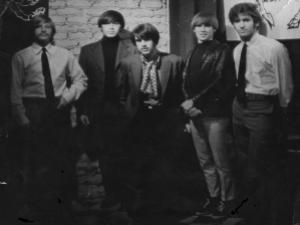 Pulse was a group formed from the ashes of two bands managed by Doc Cavalier, who owned Syncron Studios in Wallingford, later Trod Nossel. One was the Bram Rigg Set (left), who had formed in 1966 and had a single on Kayden, I Can Only Give You Everything, the other the Shags, who had enjoyed great popularity in New Haven and the state for several years with singles such as Wait And See and Hey Little Girl. Both broke up in the summer of 1967.

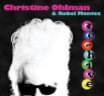 While I’m at it, Christine, who has sung with the Saturday Night Live band for years, has just released a retrospective, Re-Hive, with her band Rebel Montez, which is still very active on the Connecticut circuit.