In the early- to-mid-1970s, it would have been hard to imagine that Marianne Faithfull, a homeless junkie on the streets of London, would have the best of her musical career in front of her. But it’s true. Although still plagued by addiction for some years before getting clean, Faithfull began a comeback in earnest with 1979’s Broken English, a far cry from her ’60s ingenue days that gave her a hit with As Tears Go By, written by Mick Jagger and Keith Richards.
 She has been very productive since, and although she doesn’t hit the mark with every release, Faithfull has managed to make more than a handful of quality albums. Her latest, Easy Come Easy Go, a covers record produced by Hall Willner, with whom she has done some of her best work, is one such entry.
Willner’s production is pristine and he has assembled an outstanding roster of musicians and vocalists who give Faithfull some of the best support she has ever enjoyed. A core rhythm section of Rob Burger, keyboards, Jim White, drums, Greg Cohen, bass, and Marc Ribot, Barry Reynolds and Sean Lennon on guitars, is augmented by singers Chan Marshall, Nick Cave, Rufus Wainwright, Teddy Thompson, Jenni Muldaur and Antony. But Faithfull is still the focal point with her world-weary, weathered voice that exudes experience and carries most of the album’s tunes, despite technical shortcomings, with character and an almost old-world charm.
Unlike Strange Weather, one of Faithfull’s best in collaboration with Willner that was heavy on ballad standards with a cabaret style at times, the moderate to uptempo songs work best on this album. Although there are some gems among the slow-tempo numbers. Continue reading Faithfully rendered
 I’m a big fan of Amazon. I should be, I’ve spent quite a bit of money there, mostly on CDs, vinyl, electronics and computer gear in the past five or six years. I’m an even bigger fan of their Marketplace, where you can buy almost anything for less than what Amazon sells an item for from, in my experience, reputable sellers.
 Cream was scheduled to play at Boston’s Back Bay Theatre in April, but they were also going to play near my hometown in New Haven at Yale’s Woolsey Hall on April 10th and I decided to come home for that, mainly because I had a new girlfriend who was still in school in New Haven. This would be our first big concert date. That made sense.
 Diana Krall’s Quiet Nights, at first, begs for an evening with the lights down low, a bottle of wine and your significant other. But it also plays well for a sunny, sandy beach day with its Brazilian connections. Fully three of the 10 main selections are from the book of Antonio Carlos Jobim, including the title track, and one by Marcos Kostenbader Valle and Paolo Sergio Valle, the wonderful So Nice. Most of the others share a bossa feel.
 I was having mid-afternoon waffles at a small breakfast/dinner restaurant near Kenmore Square when my buddies, one of whom was a fellow bass player from Connecticut, and I found out that Cream, yes that Cream, would be playing practically across the street at a new club called the Psychedelic Supermarket. I was astonished by my good fortune that Cream, one of my favorite bands would be in town, just a few blocks from my dorm on Commonwealth Avenue, and that they were scheduled to play for two weeks! I intended going more than once.
 He launched into what has become in the past few years his traditional opener, Beck’s Bolero, a Jimmy Page composition from the classic 1968 Truth album with the Jeff Beck Group, which influenced most of the heavy blues-based rock that would follow in the 1970s (see Led Zeppelin). The album cut is heavily produced. In concert, the tune benefits from a scaled down, tight, spare version with his four-piece band: Vinnie Colaiuta, drums, Tal Wilkenfeld, bass and Jason Rebello on keyboards.
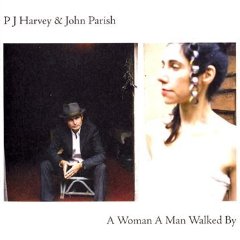 For instance, her most accessible album, Stories From The City, Stories From The Sea (2000), which although sounded in some ways commercial for Harvey was really anything but when compared to Top 40 fare, was followed by a return to rawness and simplicity in Uh Huh Her (2004), reminiscent of some of her earliest work. Next came White Chalk (2007), completely piano-based, a first for her.
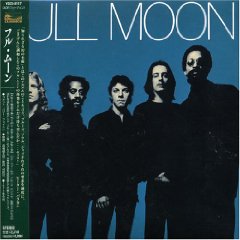 The self-titled album Full Moon from 1971 fits into this category. Three of its members came from the Paul Butterfield Blues Band, drummer Phillip Wilson and tenor saxman Gene Dinwiddie (billed as Brother Gene Dinwiddie throughout the album’s credits), both of whom joined Butterfield around 1967 for The Resurrection Of Pigboy Crabshaw, and Buzz Feiten, who joined Butter a little later in ’68 replacing guitarist Elvin Bishop. Feiten, who did a stint with the Rascals after Butterfield, was one of the most unusual additions to Butterfield’s band, younger than most of the other players, precocious, almost punk for 1968. He brought a different sound and style and great versatility to the band with his piercing Fender Strat, cut more from a soul vein than blues.
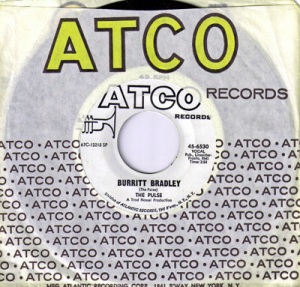 In January, 1968, Pulse started rehearsing in earnest to play some live dates and start recording its first album. The first gig was to be at a small club in Watertown, the Shack. We used to rehearse in what was called the Shed in back of Syncron Studios. The rehearsal room was an unfinished concrete-floored area no larger than a two-car garage with 2×4 framing exposed on the first floor of what looked like an old barn. This was perhaps the most dangerous place I’ve ever rehearsed, yet we carried on in the Shed for 2-plus years as Pulse.
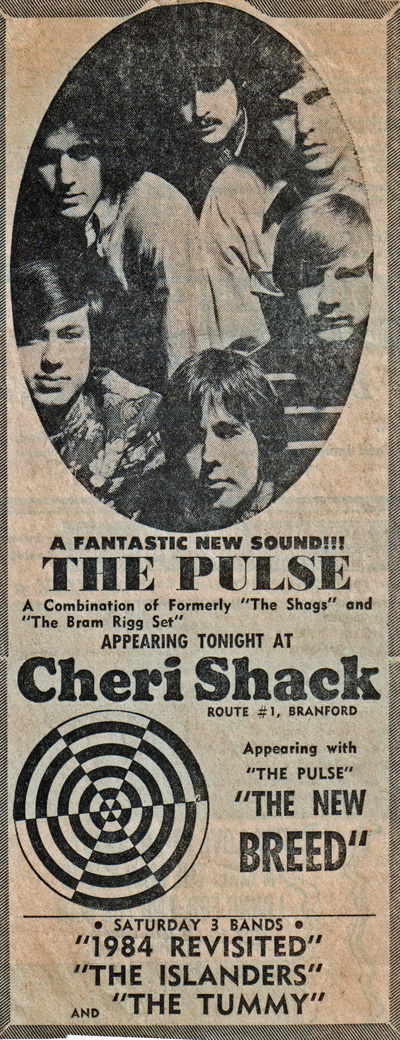 Soon after forming, we added a sixth member, Jeff Potter, who played a mean blues harp and also added percussion with a conga drum and eventually occasional keyboards. Ray Zeiner, the keyboard player from the Wildweeds, had recommended him. Jeff and Ray lived next door to each other right down on the Connecticut River up near Hartford. Those houses are no longer there since the area flooded every so often. The Weeds had recently come into the fold with Doc (via their terrific single No Good To Cry) and Jeff had grown up and gone to Windsor High with Al Anderson and other members of the band.