For years, the album Fiends & Angels has been one of the best kept secrets from the late 1960s blues-rock scene. Finally in 2008, the independent CD label Wounded Bird, which specializes in albums that the majors refuse to reissue, released this Martha Velez gem.
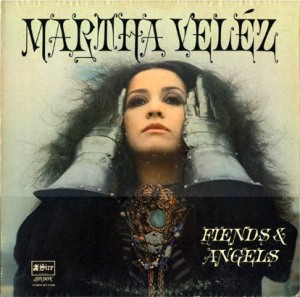 Until then, it had fetched rather pricey numbers on auction sites despite not having been a big seller at the time of its release in 1968. Still it was one of the defining blues-rock albums of the times, bringing together an almost perfect combination of singer, players and producer for a raw blues outing with unbridled energy. And some of the best playing by some of England’s best musicians.
Not available in the album credits and still not known completely, the personnel included, Eric Clapton, guitar; Jack Bruce (Cream), bass; Mitch Mitchell (Jimi Hendrix) and Jim Capaldi (Traffic), drums; Brian Auger (Oblivion Express), organ; Christine McVie (Chicken Shack, later Fleetwood Mac), piano; Keef Hartley, drums, and Chris Mercer, sax (Keef Hartley Band, John Mayall); Chris Wood (Traffic), sax and flute; and Duster Bennett, harmonica. That’s just a portion of the list.
Velez is a New Yorker, who studied opera at a young age and later attended the High School for the Performing Arts in Manhattan. She also joined a touring folk group, the Gaslight Singers, in college (Long Island University) and later had several lead roles on Broadway, including Hair. So how did she wind up recording her first solo album in England with all these prominent blues-rock musicians?
While recording a demo in New York with producer Richard Gottehrer, Seymour Stein of Sire Records was in the studio by coincidence. They immediately wanted to sign Velez and when it was revealed she loved the blues and particularly the material Cream was doing, they hooked her up with Mike Vernon, an English blues producer who had worked with the early Fleetwood Mac, John Mayall and later Ten Years After, among many others. He was also the founder of the blues label, Blue Horizon.
Vernon gathered together the elite group of musicians and a torrent of hot, inspired performances was unleashed on the material, matched perfectly to Velez’s voice, which has a trained quality but can be raunchy when needed.
 The guitar solos are ferocious on most cuts and although Clapton is said to have played on only four, he is extremely recognizable on the heavy groove of Lightnin’ Hopkins’ Feel So Bad, I’m Gonna Leave You (perhaps the album’s best two tracks), It Takes A Lot To Laugh, It Takes A Train To Cry and In My Girlish Days. This was confirmed on a Velez compilation, Angels Of The Future Past, released on CD in the late ’80s. The other solos are just as powerful and inventive, perhaps attributable to the only listed guitarist on the session, Rick Hayward, although Spit James (Keef Hartley) and Paul Kossoff (Free) are said to have also participated.
Jack Bruce is equally recognizable for his driving bass lines, all tight, punchy and restrained. Bennett blows heavy duty harp on both I’m Gonna Leave You and Feel So Bad, and Vernon also made liberal use of horns, giving the sessions yet another dimension.
The album contains so many other jewels: Velez’s funky composition Swamp Man, which holds the album’s title in the lyrics; the Joplin-esque slow blues A Fool For You; a cover of Etta James’ Tell Mama; the moderate shuffle of a smouldering Drive Me Daddy, over which Velez wails; Come Here Sweet Man, a delicate Velez original; and Let The Good Times Roll, the suitable rollicking closer. A great selection of songs.
Velez went on to record four other albums in the ’70s, including a reggae release, Escape To Babylon, produced by Bob Marley. She never fully returned to an album of all blues, although she did work with Vernon one more time on Matinee Weepers. Married to Keith Johnson, noted trumpet player with the Paul Butterfield Blues Band and Van Morrison, she also sang with Morrison’s band for a while. All her records, with the exception of her second, Hypnotized, are available from Wounded Bird.
You are unlikely to find Wounded Bird releases in a big music or electronics store at the mall. They are readily available at places such as Amazon. But a trip to the label’s web site is preferred because perusing its catalogue, you’ll find so many other long lost albums that haven’t seen the light of day on a major label.
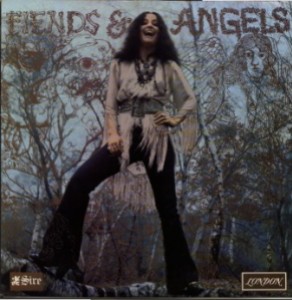
My vinyl version of Fiends & Angels is still one of my most treasured from that time period. Even one in funky condition is fetching as much as $50 on eBay, despite the CD release. You have to love that album cover, too. The second image is from the UK release. For the record, Velez’s full name is Martha Carmen Josephine Hernandéz Rosario de Veléz. That’s an earful and so is this classic album.

 Not electrifying in a showy, glitzy, glamorous sense, but in a musical sense. The two giants whose careers started in the 1960s and have paralleled each other, intersecting once for an extended period in 1969, show they are still fully capable of producing inspring and creative performances on their own material and covers of some of their contemporaries.
 It’s a pleasure to note that the film makers of Jeff Beck Performing This Week … Live At Ronnie Scott’s got it right. So right it’s one of the best concert films in recent memory. The last with this type of professionalism and dedication to the music and musicians was another Cream gig, the reunion concert from 2005, also at RAH. But the Beck show is better.
 His influence may very well reach the furthest of the three Kings with Eric Clapton and Peter Green among his disciples. And I played with him in a one-off concert in New York in the early ’70s. But more on that later.
 Cream was scheduled to play at Boston’s Back Bay Theatre in April, but they were also going to play near my hometown in New Haven at Yale’s Woolsey Hall on April 10th and I decided to come home for that, mainly because I had a new girlfriend who was still in school in New Haven. This would be our first big concert date. That made sense.
 I was having mid-afternoon waffles at a small breakfast/dinner restaurant near Kenmore Square when my buddies, one of whom was a fellow bass player from Connecticut, and I found out that Cream, yes that Cream, would be playing practically across the street at a new club called the Psychedelic Supermarket. I was astonished by my good fortune that Cream, one of my favorite bands would be in town, just a few blocks from my dorm on Commonwealth Avenue, and that they were scheduled to play for two weeks! I intended going more than once.
 He launched into what has become in the past few years his traditional opener, Beck’s Bolero, a Jimmy Page composition from the classic 1968 Truth album with the Jeff Beck Group, which influenced most of the heavy blues-based rock that would follow in the 1970s (see Led Zeppelin). The album cut is heavily produced. In concert, the tune benefits from a scaled down, tight, spare version with his four-piece band: Vinnie Colaiuta, drums, Tal Wilkenfeld, bass and Jason Rebello on keyboards.
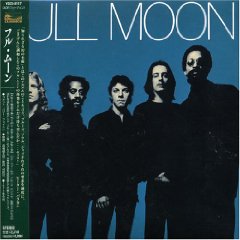 The self-titled album Full Moon from 1971 fits into this category. Three of its members came from the Paul Butterfield Blues Band, drummer Phillip Wilson and tenor saxman Gene Dinwiddie (billed as Brother Gene Dinwiddie throughout the album’s credits), both of whom joined Butterfield around 1967 for The Resurrection Of Pigboy Crabshaw, and Buzz Feiten, who joined Butter a little later in ’68 replacing guitarist Elvin Bishop. Feiten, who did a stint with the Rascals after Butterfield, was one of the most unusual additions to Butterfield’s band, younger than most of the other players, precocious, almost punk for 1968. He brought a different sound and style and great versatility to the band with his piercing Fender Strat, cut more from a soul vein than blues.