For years, the album Fiends & Angels has been one of the best kept secrets from the late 1960s blues-rock scene. Finally in 2008, the independent CD label Wounded Bird, which specializes in albums that the majors refuse to reissue, released this Martha Velez gem.
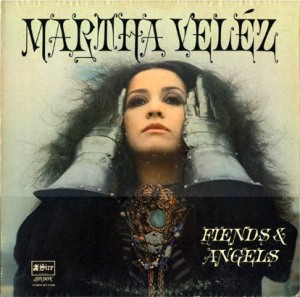 Until then, it had fetched rather pricey numbers on auction sites despite not having been a big seller at the time of its release in 1968. Still it was one of the defining blues-rock albums of the times, bringing together an almost perfect combination of singer, players and producer for a raw blues outing with unbridled energy. And some of the best playing by some of England’s best musicians.
Not available in the album credits and still not known completely, the personnel included, Eric Clapton, guitar; Jack Bruce (Cream), bass; Mitch Mitchell (Jimi Hendrix) and Jim Capaldi (Traffic), drums; Brian Auger (Oblivion Express), organ; Christine McVie (Chicken Shack, later Fleetwood Mac), piano; Keef Hartley, drums, and Chris Mercer, sax (Keef Hartley Band, John Mayall); Chris Wood (Traffic), sax and flute; and Duster Bennett, harmonica. That’s just a portion of the list.
Velez is a New Yorker, who studied opera at a young age and later attended the High School for the Performing Arts in Manhattan. She also joined a touring folk group, the Gaslight Singers, in college (Long Island University) and later had several lead roles on Broadway, including Hair. So how did she wind up recording her first solo album in England with all these prominent blues-rock musicians?
While recording a demo in New York with producer Richard Gottehrer, Seymour Stein of Sire Records was in the studio by coincidence. They immediately wanted to sign Velez and when it was revealed she loved the blues and particularly the material Cream was doing, they hooked her up with Mike Vernon, an English blues producer who had worked with the early Fleetwood Mac, John Mayall and later Ten Years After, among many others. He was also the founder of the blues label, Blue Horizon.
Vernon gathered together the elite group of musicians and a torrent of hot, inspired performances was unleashed on the material, matched perfectly to Velez’s voice, which has a trained quality but can be raunchy when needed.
 The guitar solos are ferocious on most cuts and although Clapton is said to have played on only four, he is extremely recognizable on the heavy groove of Lightnin’ Hopkins’ Feel So Bad, I’m Gonna Leave You (perhaps the album’s best two tracks), It Takes A Lot To Laugh, It Takes A Train To Cry and In My Girlish Days. This was confirmed on a Velez compilation, Angels Of The Future Past, released on CD in the late ’80s. The other solos are just as powerful and inventive, perhaps attributable to the only listed guitarist on the session, Rick Hayward, although Spit James (Keef Hartley) and Paul Kossoff (Free) are said to have also participated.
Jack Bruce is equally recognizable for his driving bass lines, all tight, punchy and restrained. Bennett blows heavy duty harp on both I’m Gonna Leave You and Feel So Bad, and Vernon also made liberal use of horns, giving the sessions yet another dimension.
The album contains so many other jewels: Velez’s funky composition Swamp Man, which holds the album’s title in the lyrics; the Joplin-esque slow blues A Fool For You; a cover of Etta James’ Tell Mama; the moderate shuffle of a smouldering Drive Me Daddy, over which Velez wails; Come Here Sweet Man, a delicate Velez original; and Let The Good Times Roll, the suitable rollicking closer. A great selection of songs.
Velez went on to record four other albums in the ’70s, including a reggae release, Escape To Babylon, produced by Bob Marley. She never fully returned to an album of all blues, although she did work with Vernon one more time on Matinee Weepers. Married to Keith Johnson, noted trumpet player with the Paul Butterfield Blues Band and Van Morrison, she also sang with Morrison’s band for a while. All her records, with the exception of her second, Hypnotized, are available from Wounded Bird.
You are unlikely to find Wounded Bird releases in a big music or electronics store at the mall. They are readily available at places such as Amazon. But a trip to the label’s web site is preferred because perusing its catalogue, you’ll find so many other long lost albums that haven’t seen the light of day on a major label.
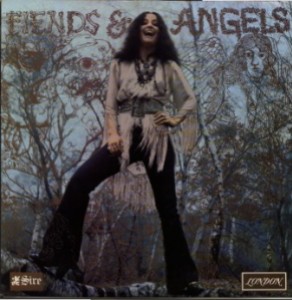
My vinyl version of Fiends & Angels is still one of my most treasured from that time period. Even one in funky condition is fetching as much as $50 on eBay, despite the CD release. You have to love that album cover, too. The second image is from the UK release. For the record, Velez’s full name is Martha Carmen Josephine Hernandéz Rosario de Veléz. That’s an earful and so is this classic album.
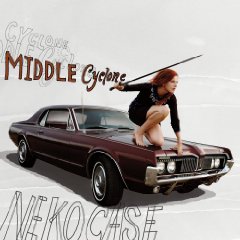 Case’s crystal clear voice, so pure and with seemingly limitless range, delivers lyrics of vivid imagery sometimes mixed with metaphor (I have waited with a glacier’s patience, smashed every transformer with every trailer, ’til nothing was standing), sometimes with doses of hard-nosed reality (The next time you say forever, I’ll punch you in your face) over whirlwind muscianship. Her brand of country sounds rooted in the west rather than the south, and her songs stop short of radio-friendly hooks but exhibit beautiful melodies in unusual and creative constructions that invite revisiting after each listen.
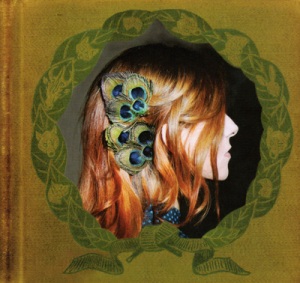 The haunting melodies of Polar Nettles and Prison Girls, with its droning guitar and pop sensibilities, stand apart starkly from much of the other material but still work perfectly. Never Turn Your Back On Mother Earth (a tune by Sparks) plays like an anthem, the background vocals building to a wall of sound by the end. The track also shows Case’s tendency at times toward classical and Celtic sounding melody.
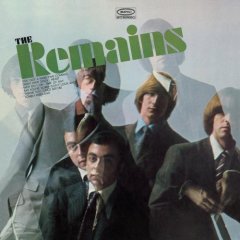 The Remains were known for their intense live shows and I was lucky enough to see them twice, once in their neighborhood and once as the opening act for the Beatles at Shea Stadium on the Fab Four’s last tour (1966) of the States.
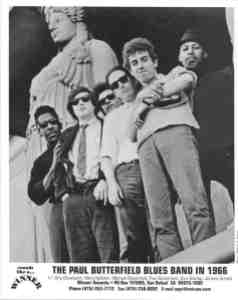 I’ve been to quite a few concerts over the years, many influential, some inspiring. The earliest big venue shows were in the fall of 1965, both at the New Haven Arena. In early November, it was the Rolling Stones with Brian Jones on second guitar in the wake of their summer mega-hit Satisfaction. The Stones sounded and looked great, but it was a relatively sedate performance compared with ones for which the band became infamous. A side note on the Stones show is that the first time they were booked for the Arena, the summer of ’64, the show was actually canceled because of insufficient ticket sales. Amazing. The second show, the Beach Boys with Brian Wilson on bass, on Thanksgiving Day. The Boys wore yellow short-sleeved oxford shirts with gray slacks, not their customary black-and-white and white khakis (I guess because it was a holiday) and with Brian in the fold sounded like angels. Two rather different groups but both rode the singles charts and that’s what drove the music industry at the time.
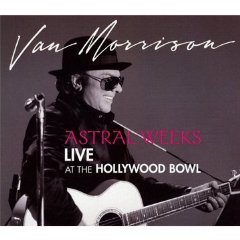 He’s also known to be, at times, a tempermental live artist. I saw him play at Lake Compounce in Bristol, CT in the early ’90s when that venue put on concerts. The highlight of the show was when Morrison wasn’t even on stage. At the time, jazz-pop vocalist Georgie Fame, who had several worldwide hits in the ’60s including Yeh, Yeh and The Ballad Of Bonnie & Clyde, was leading Van’s band. Fame came out alone and played two songs accompanying himself on Hammond B-3, Willie Dixon’s I Love The Life I Live in a Mose Allison style and Yeh, Yeh, both outstanding solo renditions. Van then came out, played a 50-minute set, left the stage and did not return despite a standing ovation.
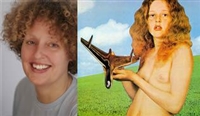 Below is a rather long excerpt from an even longer note about the creation of the Blind Faith cover by Bob Seidemann, the photographer who came up with the concept and shot the model holding the “spaceship.” To read the entire note you can go
 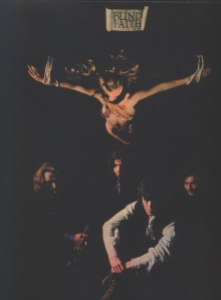 If you think the cover was an alarming image, check out this cover to the band’s tour program with a nude covered by her long hair in all the vital places blind-folded and on a crucifix.
 We asked her what her fee should be for modeling, she said a young horse. I called the image ‘Blind Faith’ and Clapton made that the name of his band. When the cover was shown in the trades it hit the market like a runaway train, causing a storm of controversy. At one point the record company considered not releasing the cover at all. It was Eric Clapton who fought for it. If this was not to be the cover, there would be no record. It was Eric who elected to not print the name of the band on the cover. This had never been done before. The name was printed on the wrapper, when the wrapper came off, so did the type.
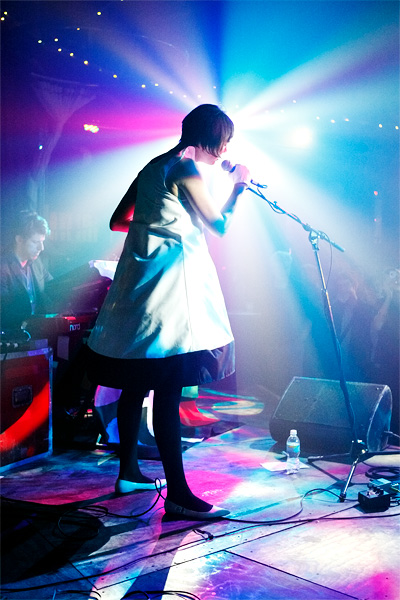 Imara George stopped singing, although her partner keyboard player Greg Kurstin continued vamping on the chords of the intro, and asked, “Are you all right?” Then when she’d seen he recovered, she laughed and the audience broke into laughter as well. She said, “I didn’t mean to laugh but after he said he was all right, I realized it was kind of funny. Don’t worry I do shit like that all the time.” More laughter. Then she repeated the opening line of Ray Gun from their latest release Ray Guns Are Not Just The Future and was fully immersed in their set, a wonderful mix of pop/rock melodies ladened with jazz sensibilities and George’s sense of humor.
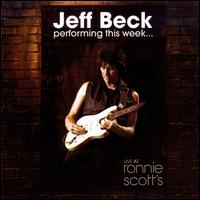 Beck, acknowledged as one of the world’s greatest guitar players, has had a varied career that started in earnest with the Yardbirds, replacing Eric Clapton, through two versions of the blues-rock based Jeff Beck Group and on to a long run at the forefront of fusion music. When Beck made the transition to jazz-rock in the ’70s, he finally started garnering appropriate accolades for his prowess. As the guitarist in the Yardbirds, he was well-known to the general public in England but not so much in the States. Still, as early as the mid-’60s he was experimenting with extraordinary sounds on the guitar before many of the decade’s guitar heroes, including Jimi Hendrix, who cited Beck as an influence.
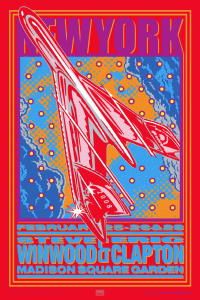
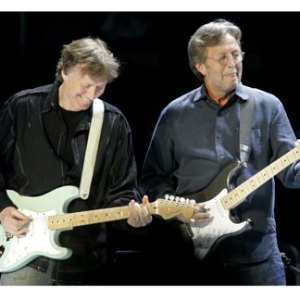 They had performed together in early 2007 at an English festival, Clapton joining Winwood’s touring band, and later that summer at Clapton’s Crossroads Festival in Chicago. Their set, which closed the event, had Winwood this time playing with Clapton’s band. It’s all documented on the DVD of the festival, and it’s a spectacular performance by both.