At the top of this home page you’ll notice three links to new pages on the site. Two are photo pages of classic rock bands Cream and Blind Faith. The Cream page has actually been up for about a week. The third page is labeled The Trick Is aStore, short for The Trick Is To Keep Going Associates Store, a referral page for Amazon.com.
I’m a big fan of Amazon. I should be, I’ve spent quite a bit of money there, mostly on CDs, vinyl, electronics and computer gear in the past five or six years. I’m an even bigger fan of their Marketplace, where you can buy almost anything for less than what Amazon sells an item for from, in my experience, reputable sellers.
Here’s how the Associates Store works. If you go to that page you’ll find listings for these categories: Music, Musical Instruments, MP3 Downloads, DVD, Electronics, Computers, Cameras and Photo, Kindle Store, Books, Software and Video Games. There is a search engine and anything you can find on Amazon you can find on this new page. A details page with customer reviews for each item that comes up on a search is available by clicking on the item. You can place items in a shopping cart and if you decide to buy anything and hit checkout, you will be transported to Amazon.com, where you can approve putting those items in your cart there and go through their checkout process. There is also a handy link back to The Trick Is To Keep Going on the page.
So what’s the difference? Not much really. Although when you search at The Trick Is aStore, it’s probably going to be faster because you’re not dealing with some of the long load times for the Amazon pages. And you can stay here at the site. The Trick Is receives a very modest referral fee if you decide to purchase something this way. You may find it convenient.
So that’s it. Hope you like the photo pages and the aStore. Thanks for all the support for The Trick Is To Keep Going from new and old friends.
In Concerts Vol. 3, I wrote about the single concert performance that was probably the best out of hundreds I’ve attended and certainly the most influential: Cream at the Psychedelic Supermarket in Boston, September, 1967.
That wouldn’t be the only time I would see this amazing trio. I was lucky enough to see them three more times in a little more than a year. The second opportunity came in April, 1968. I was still going to school in Boston at Berklee School of Music and coming home on weekends to rehearse and/or play the Connecticut club scene with Pulse.
Cream was scheduled to play at Boston’s Back Bay Theatre in April, but they were also going to play near my hometown in New Haven at Yale’s Woolsey Hall on April 10th and I decided to come home for that, mainly because I had a new girlfriend who was still in school in New Haven. This would be our first big concert date. That made sense.
The intact ticket above is from that date. I didn’t hold on to many tickets or stubs from that period, but I kept this one tucked away in an old wallet. I’m glad I did. The reason it’s intact is that the Yale students didn’t take or rip any tickets, they just looked at them. Thank you, Yalies.
After playing for a week of a scheduled two-week engagement in Boston in September, 1967, Cream cut short its stay there over money problems with the owner of the Psychedelic Supermarket, not to mention they disliked Boston because of the discrimination and derogatory comments on the streets they endured, and moved on to play New York at several venues, including the Cafe Au Go Go and Village Theatre (later Fillmore East).
They also played two shows in Michigan, the second at Detroit’s Grande Ballroom in a much booted performance with fairly decent sound, a pretty good example of what they sounded like that fall. From there, they toured Europe fairly extensively, leading up to the release of their second album, Disraeli Gears (November, U.K., December, U.S.), the record that really started to break them as a big act. Continue reading Concerts Vol. 4: Heavy Cream→
Mrs. Elvis Costello dedicates her latest album to Declan, Dexter and Frank, her husband and twin sons. She has presented them with a cool, mellow record in a distinctly bossa nova mood from her hushed vocal approach to spare but sparkling piano solos and the pristine production by longtime collaborator Tommy LiPuma.
Diana Krall’s Quiet Nights, at first, begs for an evening with the lights down low, a bottle of wine and your significant other. But it also plays well for a sunny, sandy beach day with its Brazilian connections. Fully three of the 10 main selections are from the book of Antonio Carlos Jobim, including the title track, and one by Marcos Kostenbader Valle and Paolo Sergio Valle, the wonderful So Nice. Most of the others share a bossa feel.
I nearly flinched when I saw the number of musicians credited and with all those strings was wary of the record being overloaded with orchestrations. But the arrangements are tasteful and subtle, never overpowering the singer or her core band of Anthony Wilson, guitar, John Clayton, bass, Jeff Hamilton, drums, and Paulinho Da Costa, percussion. Claus Ogerman, who arranged some of Astrud Gilberto’s ’60s solo work and worked with Jobim, returns as arranger, having previously worked with Krall on The Look Of Love from 2004.
The album opens with two standards transformed by the bossa style, Hart & Rodgers’ Where Or When, a Sinatra staple, and Johnny Mercer’s Too Marvelous For Words, both featuring a concise piano solo, Wilson’s persistent guitar rhythm and an undercurrent of strings. Krall’s vocal interpretation of Marvelous is individualistic and compelling. Continue reading Diana in a bossa mood→
I mentioned in Concerts Vol. 1 that one of my earliest major influences from a live show was seeing the Paul Butterfield Blues Band at the Cafe Au Go Go in the winter of 1966-67. That remains true but there was a series of concerts that had an even bigger impact for me. I saw Cream play live four times in 13 months between September, 1967 and October, 1968. After the first show, nothing would ever be the same for me musically.
I had just arrived in Boston for freshmen orientation at Boston University in the first week of September, 1967. Back then, freshmen came up to the school for a full week before classes, unlike today when orientation is usually finished up in less than two days by many colleges.
I was having mid-afternoon waffles at a small breakfast/dinner restaurant near Kenmore Square when my buddies, one of whom was a fellow bass player from Connecticut, and I found out that Cream, yes that Cream, would be playing practically across the street at a new club called the Psychedelic Supermarket. I was astonished by my good fortune that Cream, one of my favorite bands would be in town, just a few blocks from my dorm on Commonwealth Avenue, and that they were scheduled to play for two weeks! I intended going more than once.
My first encounter with Cream was in one of the old listening booths at one of the best record shops in Connecticut in the ’60s, Cutler’s, which was on Broadway in New Haven. In the spring of 1967, my friend and fellow band-mate in the Bram Rigg Set, Beau Segal, told me I had to check out this group from England that featured the Cream of the crop among British blues musicians and were aptly named.
I went down to Cutler’s with a friend, Holly Lovig, who if you remember accompanied me on the trip to see that first Butterfield concert in New York. Those listening booths at Cutler’s were great. One of the clerks would spin a record on a turntable in back of the store’s elevated counter and pipe in the music to one of I believe at least two booths, which was wood and glass and had a large glass pane in the door so you could look out at the store while you listened. Precursor to the headphones you find at record stores today. Continue reading Concerts Vol. 3: Fresh Cream→
Billed as the Legendary Jeff Beck, the guitar maestro walked onto the stage of the 4,000-seat MGM Grand at Foxwoods Saturday night decked out like a white knight. He had on a white T-shirt, white vest, white scarf, skin-tight white pants tucked into white boots with fringe and a white, the body naturally yellowed, Fender Strat with a white pickguard.
He launched into what has become in the past few years his traditional opener, Beck’s Bolero, a Jimmy Page composition from the classic 1968 Truth album with the Jeff Beck Group, which influenced most of the heavy blues-based rock that would follow in the 1970s (see Led Zeppelin). The album cut is heavily produced. In concert, the tune benefits from a scaled down, tight, spare version with his four-piece band: Vinnie Colaiuta, drums, Tal Wilkenfeld, bass and Jason Rebello on keyboards.
The tune set the stage for a set consisting of most of Beck’s best known tunes from his fusion era, which now spans the mid-to-late 70s to present day. The Pump and You Never Know, from the ’80s album There And Back, followed. Beck is still in command of his considerable and unique skills, playing in his hybrid style, sans pick, of using his thumb and fingers and producing a trademark sound with effects he generates mainly through only his hands, sounds he has been noted for since his days with the Yardbirds in the mid-’60s.
The first ballad was the stellar Cause We’ve Ended As Lovers, from Blow By Blow, the album that really brought Beck to prominence as a solo artist in the 1970s. The tune, though, was dominated by Wilkenfeld, a 23-year-old female wunderkind, who took a breath-taking solo and received a big response from the audience. Continue reading Bolero, Beck-Style→
PJ Harvey has often said she never wants to repeat herself. As her catalogue bears out, she always changes direction for each new project. Although it’s inevitable that an artist will in some ways repeat herself, she does an admirable job of sticking to her goal.
For instance, her most accessible album, Stories From The City, Stories From The Sea (2000), which although sounded in some ways commercial for Harvey was really anything but when compared to Top 40 fare, was followed by a return to rawness and simplicity in Uh Huh Her (2004), reminiscent of some of her earliest work. Next came White Chalk (2007), completely piano-based, a first for her.
Of course the common vein running through these, as with all her work, is the distinctive, accomplished voice, pure at times or rough-edged and manipulated through electronics at others, a compelling sense of melody that is rooted in her knowledge and appreciation for the roots of modern day rock and the thought-provoking vivid imagery of her lyrics that are never conventional.
A Woman A Man Walked By is Harvey’s second collaboration with John Parish, the first Dance Hall At Louse Point from 1996. They have worked together for a long time, since Harvey’s early days with Automatic Dlamini when she played saxophone for that band and on her solo work, particularly To Bring You My Love (1995), during which Parish played in her touring band. For both of their albums, Parish writes and plays the music and Harvey writes the words. Although I’ve often wondered how much input she must have with melody. I would think some at least. Continue reading A Woman a man again→
After writing about Martha Velez’s 1968 release Fiends & Angels, I realized there are a number of albums that qualify as either era-defining or being highly influencial despite not having gained widespread recognition. These records weren’t huge sellers on first release but still made an impact, mostly with musicians, and all stand up today.
The self-titled album Full Moon from 1971 fits into this category. Three of its members came from the Paul Butterfield Blues Band, drummer Phillip Wilson and tenor saxman Gene Dinwiddie (billed as Brother Gene Dinwiddie throughout the album’s credits), both of whom joined Butterfield around 1967 for The Resurrection Of Pigboy Crabshaw, and Buzz Feiten, who joined Butter a little later in ’68 replacing guitarist Elvin Bishop. Feiten, who did a stint with the Rascals after Butterfield, was one of the most unusual additions to Butterfield’s band, younger than most of the other players, precocious, almost punk for 1968. He brought a different sound and style and great versatility to the band with his piercing Fender Strat, cut more from a soul vein than blues.
They joined forces in 1971 with keyboardist Neil Larsen, from Florida, who later in the ’70s would record a string of exemplary jazz-fusion albums and also delve into pop rock with Feiten in 1980 as the Larsen-Feiten Band, and bassist Freddie Beckmeier. Over the years, Larsen and Feiten have also become legendary session players who have worked on hundreds of albums and with a who’s who of the music industry.
The resulting album, produced by Alan Douglas (yes, that Alan Douglas apparently, famous or perhaps infamous as onetime keeper of the Jimi Hendrix archive) was far from a blues-rock workout. It incorporated elements of soul, R&B and early jazz fusion built on strong songwriting from all members. Vocals were shared and more than capable and the playing a combination of forward-moving jazz, rock and soul with proficient and inspired soloing. Continue reading From the Vaults: Hidden Treasure, No. 2→
To recap part 2: At the end of the summer of 1967, two popular New Haven-based bands broke up at the prodding of manager/producer Doc Cavalier, who owned Syncron Studios (later Trod Nossel) in Wallingford. Three members from the Shags and three from the Bram Rigg Set joined to form The Pulse (the actual original name was The Pulse of Burritt Bradley). But after a failed single released on ATCO, the bubblegum confection Can-Can Girl, the group broke up after about six months. Pulse, a blues-rock outfit emerged with now four members from Bram Rigg Set, one lone survivor of the Shags and a new addition.
In January, 1968, Pulse started rehearsing in earnest to play some live dates and start recording its first album. The first gig was to be at a small club in Watertown, the Shack. We used to rehearse in what was called the Shed in back of Syncron Studios. The rehearsal room was an unfinished concrete-floored area no larger than a two-car garage with 2×4 framing exposed on the first floor of what looked like an old barn. This was perhaps the most dangerous place I’ve ever rehearsed, yet we carried on in the Shed for 2-plus years as Pulse.
The danger lay in the ceiling, which was probably less than a foot above everyone’s heads. In fact, there was no ceiling, instead it was the foil side of insolation tucked in between the framing. So, if you happened to lift the neck of your guitar a little too high as when you were taking if off and your hands were touching the strings, you were in for a maximum jolt of electricity, the kind that tenses your entire body. I’ve had a few of those in my days, several from the Shed and it is as you may know no fun and rather scary. Still, we persevered.
Soon after forming, we added a sixth member, Jeff Potter, who played a mean blues harp and also added percussion with a conga drum and eventually occasional keyboards. Ray Zeiner, the keyboard player from the Wildweeds, had recommended him. Jeff and Ray lived next door to each other right down on the Connecticut River up near Hartford. Those houses are no longer there since the area flooded every so often. The Weeds had recently come into the fold with Doc (via their terrific single No Good To Cry) and Jeff had grown up and gone to Windsor High with Al Anderson and other members of the band.
Jeff added an element we needed and loved. The band was influenced by the great blues-rock groups of the times and in ’67-’68 that meant Paul Butterfield, Cream, Jimi Hendrix, John Mayall and others. So the lineup was Carl Donnell (Augusto), lead vocals and rhythm guitar, Peter Neri, lead guitar and vocals, Rich Bednarzck, keyboards, Paul Rosano, bass, Beau Segal, drums and Jeff.
We set out putting together two sets worth of material that included some unusual covers and what few original tunes we had at the time. We chose cover material that was not the usual fare for local bands in the same vein as the Bram Rigg Set, which always played songs no one else touched. This was largely influenced by Beau and when Bram Rigg was together lead singer Bobby Schlosser. Continue reading CT Rock ‘n Roll: Pulse, Part 3→
When I think of 1969, I think the end of the hippie dream, the fading of peace and love. After the violence of the Democratic convention in ’68, it appeared the Yippies were taking precedence over the original anti-war movement that so many of us bought into when we were at college.
Despite the triumph of Woodstock, the year ended on the foreboding trajedy of Altamont. It was the year the Beatles said farewell, another dream that was ending. So when I think about 1969, I don’t necessarily think of great albums first. But as Mojo Magazine points out in a recent special edition with a piece aptly titled 69 from 1969, which we acknowledge with the headline above, there was a motherlode of great music released in 1969. The music was changing and the early ’70s gave us another wave of great music as well with the dawn of the singer-songwriter era. But the decade’s last year included an impressive list of offerings.
You can find music just as good or better from any year in the ’60s. But since it’s 40 years on for this watershed year, we have a poll below in which you can vote. To refresh your memory, here are some of the highlights in no particular order:
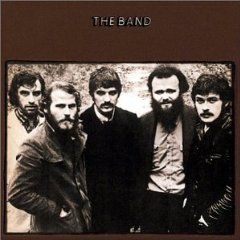
The Band, The Band: Their second release and perhaps my favorite, along with Stage Fright, filled with songs that make up one of the foundations of today’s Americana movement.
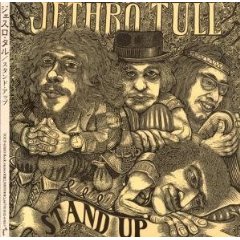
Everybody Knows This Is Nowhere, Neil Young: His second, and although I for one liked the weak-selling debut, this unquestionably has several of his standards. Led Zeppelin I, Led Zeppelin: Some prefer the second, released in late 1969, but this really had the bigger impact as far as influencing the music scene. It was hard rock, but quite different in some ways than anything before. Stand Up, Jethro Tull: Arguably their best, predating the more progressive leanings of the band.
A Salty Dog, Procol Harum: Speaking of prog, but really is it? Using classical ideas and instrumentation in a tasteful combination is more like it. The Gilded Palace Of Sin, The Flying Burrito Brothers: Gene Clark, the Byrds and others had recorded tracks and some nearly full albums of what was to be called country rock, but Gram Parsons’ first project as a leader really set the stage for the Eagles and those who followed. Tommy, the Who: Many cite other Who albums as superior to this and that’s probably true, but none had a bigger influence in the grand scheme of things.
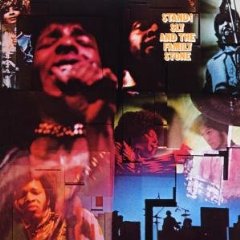
Stand, Sly & the Family Stone: This is loaded with classic Sly songs, Everyday People, I Want To Take You Higher, Sing A Simple Song, You Can Make It If You Try. Crosby, Stills & Nash, Crosby, Stills & Nash: Deja Vu had some better songs on it, but as a trio this was their highlight. Dusty In Memphis, Dusty Springfield: A peak from a remarkably consistent vocalist, career defining. Blind Faith, Blind Faith: The one-off, with about 15 minutes of filler, still holds up as a solid outing with at least a couple of rock ‘n roll classics. Abbey Road, the Beatles: A fitting sendoff, which was recorded after but released before their official swan song, Let It Be. In A Silent Way, Miles Davis: I preferred the first real experiment into fusion, Miles In The Sky (1967), but there is no doubting the impact of this outing. Clouds, Joni Mitchell: I always think of this as coming out earlier than 1969, but her career didn’t take off in earnest as a solo performer until the ’70s with Blue and For The Roses. Then Play On, Fleetwood Mac: The last gasp of the original Mac with Peter Green. It may have been the last but it has some wonderful blues romps, including Oh Well. Let It Bleed, the Rolling Stones: Their decided shift back to blues-influenced rock on Beggar’s Banquet is followed by incorporating country blues into the mix. One of their last great ones.
There are many others, the Allman Brothers’ debut; Fairport Convention’s Liege & Lief, not as well known in the States as the U.K., where it is a folk-rock staple; Santana’s and Chicago’s first. The list goes on.
What do you think? Vote for the best album of 1969.
Several times over the years I’ve seen opening acts blow away a headliner. I mentioned one such concert that involved the original Jeff Beck Group with Rod Stewart at Woolsey Hall in New Haven in 1969.
Two stand out above the rest though. The more recent was on Oct. 18, 1977. I know the date not because I still have a ticket stub, but because the concert became an album release for the headliner, Robin Trower (left, top), titled King Biscuit Flower Hour Presents, recorded at the now demolished New Haven Coliseum.
I was a huge Trower fan at the time and had seen him in the same venue close to two years earlier after the release of his third solo album. His band included James Dewar on bass and vocals and drummer Bill Lordan, who had played with Sly Stone.
At that concert, most of the material came from the seminal hard blues-rock album Bridge Of Sighs (1974), including Day Of The Eagle, Too Rolling Stoned and others, and a smattering from his latest, For Earth Below (1975). By 1977, Trower had released Long Misty Days, not as popular as his first three, and had just released In City Dreams, which took a decided funkier and not quite as heavy turn.
The opening act was the group Derringer, led by another guitar flash Rick Derringer (left). Since Derringer had released its first album in 1975, they had toured relentlessly and played in Connecticut frequently and New Haven often at the Arcadia Ballroom on Whalley Avenue, which at one time was a Nelke Motors dealership, selling Mercedes cars, and in Waterbury at the Red House.
I’d seen Derringer many times and his band was a solid hard rock outfit, with good songs and outstanding players. The original lineup included Vinny Appice, brother of Carmine (Vanilla Fudge, Rod Stewart) on drums, the remarkable Kenny Aaronson on bass and Danny Johnson on second lead guitar. Neil Giraldo, who went on to play with and marry Pat Benatar, would replace Johnson within a year and Myron Grombacher took over for Appice. By the time of the Trower concert Mark Cunningham was on second guitar.
Derringer had a great stage show, but I always felt it was more suited for small clubs. I’d never seen the kind of pyrotechnics he had planned for this opening slot. In addition to material from the Derringer albums, he also played Rock ‘n Roll Hoochie Koo and Still Alive And Well, prior hits. Early in his set a large group of the audience rushed to the front of the stage where they were allowed to rock out. I was midway back on the floor and though I thought they sounded great, I also thought it was kind of strange that fans were rushing the stage, even for Derringer.
It all built to a heated and intense peak when Derringer and Cunningham stood on opposite sides of the stage and actually flipped their guitars high above their heads so they twirled in the air across the stage to each other, once, twice and then flipped them high in the air and caught them without a hitch. The crowd went absolutely bonkers. Continue reading Concerts Vol. 2: Blown away→
 I’m a big fan of Amazon. I should be, I’ve spent quite a bit of money there, mostly on CDs, vinyl, electronics and computer gear in the past five or six years. I’m an even bigger fan of their Marketplace, where you can buy almost anything for less than what Amazon sells an item for from, in my experience, reputable sellers.
 Cream was scheduled to play at Boston’s Back Bay Theatre in April, but they were also going to play near my hometown in New Haven at Yale’s Woolsey Hall on April 10th and I decided to come home for that, mainly because I had a new girlfriend who was still in school in New Haven. This would be our first big concert date. That made sense.
 Diana Krall’s Quiet Nights, at first, begs for an evening with the lights down low, a bottle of wine and your significant other. But it also plays well for a sunny, sandy beach day with its Brazilian connections. Fully three of the 10 main selections are from the book of Antonio Carlos Jobim, including the title track, and one by Marcos Kostenbader Valle and Paolo Sergio Valle, the wonderful So Nice. Most of the others share a bossa feel.
 I was having mid-afternoon waffles at a small breakfast/dinner restaurant near Kenmore Square when my buddies, one of whom was a fellow bass player from Connecticut, and I found out that Cream, yes that Cream, would be playing practically across the street at a new club called the Psychedelic Supermarket. I was astonished by my good fortune that Cream, one of my favorite bands would be in town, just a few blocks from my dorm on Commonwealth Avenue, and that they were scheduled to play for two weeks! I intended going more than once.
 He launched into what has become in the past few years his traditional opener, Beck’s Bolero, a Jimmy Page composition from the classic 1968 Truth album with the Jeff Beck Group, which influenced most of the heavy blues-based rock that would follow in the 1970s (see Led Zeppelin). The album cut is heavily produced. In concert, the tune benefits from a scaled down, tight, spare version with his four-piece band: Vinnie Colaiuta, drums, Tal Wilkenfeld, bass and Jason Rebello on keyboards.
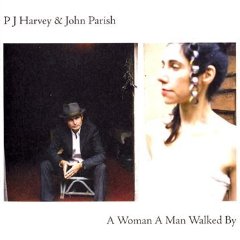 For instance, her most accessible album, Stories From The City, Stories From The Sea (2000), which although sounded in some ways commercial for Harvey was really anything but when compared to Top 40 fare, was followed by a return to rawness and simplicity in Uh Huh Her (2004), reminiscent of some of her earliest work. Next came White Chalk (2007), completely piano-based, a first for her.
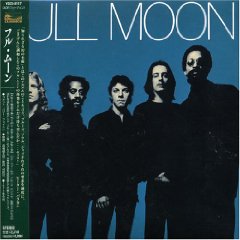 The self-titled album Full Moon from 1971 fits into this category. Three of its members came from the Paul Butterfield Blues Band, drummer Phillip Wilson and tenor saxman Gene Dinwiddie (billed as Brother Gene Dinwiddie throughout the album’s credits), both of whom joined Butterfield around 1967 for The Resurrection Of Pigboy Crabshaw, and Buzz Feiten, who joined Butter a little later in ’68 replacing guitarist Elvin Bishop. Feiten, who did a stint with the Rascals after Butterfield, was one of the most unusual additions to Butterfield’s band, younger than most of the other players, precocious, almost punk for 1968. He brought a different sound and style and great versatility to the band with his piercing Fender Strat, cut more from a soul vein than blues.
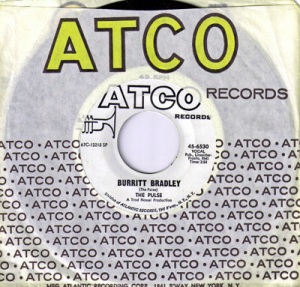 In January, 1968, Pulse started rehearsing in earnest to play some live dates and start recording its first album. The first gig was to be at a small club in Watertown, the Shack. We used to rehearse in what was called the Shed in back of Syncron Studios. The rehearsal room was an unfinished concrete-floored area no larger than a two-car garage with 2×4 framing exposed on the first floor of what looked like an old barn. This was perhaps the most dangerous place I’ve ever rehearsed, yet we carried on in the Shed for 2-plus years as Pulse.
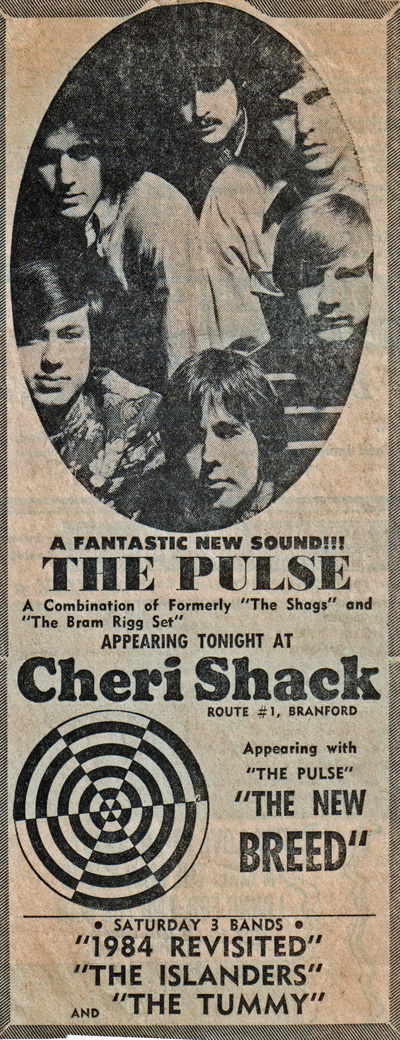 Soon after forming, we added a sixth member, Jeff Potter, who played a mean blues harp and also added percussion with a conga drum and eventually occasional keyboards. Ray Zeiner, the keyboard player from the Wildweeds, had recommended him. Jeff and Ray lived next door to each other right down on the Connecticut River up near Hartford. Those houses are no longer there since the area flooded every so often. The Weeds had recently come into the fold with Doc (via their terrific single No Good To Cry) and Jeff had grown up and gone to Windsor High with Al Anderson and other members of the band.
 Despite the triumph of Woodstock, the year ended on the foreboding trajedy of Altamont. It was the year the Beatles said farewell, another dream that was ending. So when I think about 1969, I don’t necessarily think of great albums first. But as
  The Band, The Band: Their second release and perhaps my favorite, along with Stage Fright, filled with songs that make up one of the foundations of today’s Americana movement.
 A Salty Dog, Procol Harum: Speaking of prog, but really is it? Using classical ideas and instrumentation in a tasteful combination is more like it.
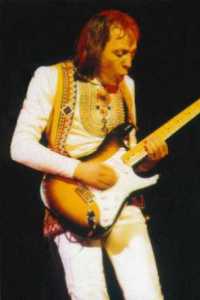 Two stand out above the rest though. The more recent was on Oct. 18, 1977. I know the date not because I still have a ticket stub, but because the concert became an album release for the headliner, Robin Trower (left, top), titled King Biscuit Flower Hour Presents, recorded at the now demolished New Haven Coliseum.
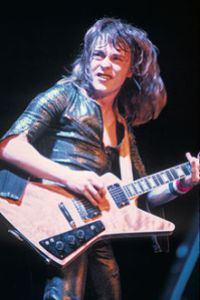 The opening act was the group Derringer, led by another guitar flash Rick Derringer (left). Since Derringer had released its first album in 1975, they had toured relentlessly and played in Connecticut frequently and New Haven often at the Arcadia Ballroom on Whalley Avenue, which at one time was a Nelke Motors dealership, selling Mercedes cars, and in Waterbury at the Red House.