Between the departure of Peter Green and the arrival of Lindsay Buckingham and Stevie Nicks, Fleetwood Mac soldiered on in the early-to-mid 1970s re-fashioning their sound over six albums, a span of time and music that is largely forgotten by the general music listening audience.

On those six releases, there are nuggets worth discovering or revisiting and an indication of where the band would eventually wind up artistically, considerably distant from where it started.
Fleetwood Mac quickly became a British blues institution in the late 1960s with a lineup that included the rock solid rhythm section of John McVie, bass, and Mick Fleetwood, drums, along with Green, one of the U.K.’s preeminent blues guitarists and Jeremy Spencer, an Elmore James loyalist and early rock ‘n roll enthusiast.
Mac enjoyed single and album chart success in the U.K. and enjoyed good album numbers in the States for their self-titled debut, second release Mr. Wonderful, augmented by horns and guitarist Danny Kirwan, and third record English Rose, along with the compilation Pious Bird Of Good Omen.
After Green’s semi-involvement with an excellent fourth record, Then Play On, which has a muddled history of its own, founder Green left. It wasn’t until 1975 that Mac found mega-million selling worldwide success with Buckingham, Nicks and Christine McVie with the release of Fleetwood Mac and then Rumours in ’77, music in a much more pop-oriented vein but executed beautifully.
The years in between saw the release of Kiln House (1970), same as the lineup for the second album minus Green, Future Games (1971), which saw the departure of Spencer, the additions of American guitarist Bob Welch and singer/songwriter/pianist Christine McVie and the emergence of Kirwan as an equal if not dominant writer in the group, Bare Trees (1972), Penguin (1973), goodbye Kirwan, hello singer Dave Walker and guitarist Bob Weston, Mystery To Me (1973), so long Walker, and Heroes Are Hard To Find (1974), adios Weston.
Welch left after Heroes and a year later came the Buckingham-Nicks era. Continue reading Under The Radar, No. 3: Fleetwood Mac, the forgotten years
 Tanta was the perfect blending of bossa nova with modern sensibilities, infused with tasteful electronica. Produced by Suba, the album was a wonderful collaboration with a mix of songs sung in Portuguese and English, including Brazilian classics, standards such as So Nice as well as Gilberto’s original material.
 I don’t recall anyone buying the mono version. Perhaps if you couldn’t afford the $1 extra for stereo, because that’s all it was. But that’s not the point. The way to listen to Sgt. Pepper’s back then, as it is now, was in stereo.
 She came clearly into the public conscience after her recording of Jack Nitzsche and Sonny Bono’s Needles and Pins in 1963 and followed it with her own When You Walk In The Room. In 1964, both songs became hits for the English band The Searchers.
 From the moment I walked in I was struck by the sound of a young woman’s voice. She was set up in the cafe playing solo, accompanying herself on a Yamaha electric piano. As I walked around I kept being drawn to the woman’s accomplished classical-leaning playing and her smooth, proficient and captivating vocals.
 If you pre-ordered the set, you also received another previously released concert on DVD/CD, Sugar Mountain Live At the Canterbury House 1968, which I wrote about back in December in
  A British musician who also belonged in this group stood apart somewhat because his music was singular, based in folk but incorporating elements of rock, pop and ethnic music from Celtic to Greek. That was Cat Stevens.
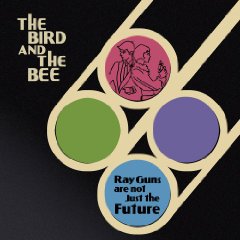 So, I was watching Leno the other night and who appears at the end of the show? The Bird and the Bee, which is Inara George’s group with Greg Kurstin, who writes all the music with her and plays most of the instruments on their two CDs. Their performance was not only quite good, it was almost surreal. You can see for yourself in the clip below of the band performing the same tune, My Love, at the Independent in San Francisco.
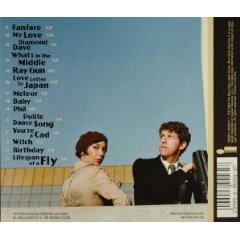 The Bird and the Bee bring a refreshing approach to what at first strikes you as a pure pop sound. But there’s more going on. Its foundation features sophisticated instrumentation and technique, impeccably arranged underneath George’s ethereal vocals, which float airily between hushed Brazilian cool and jazz-tinged soulfulness. The writing accents beautiful melodies backed with sun-drenched harmonies and smart, somewhat elusive lyrics.